
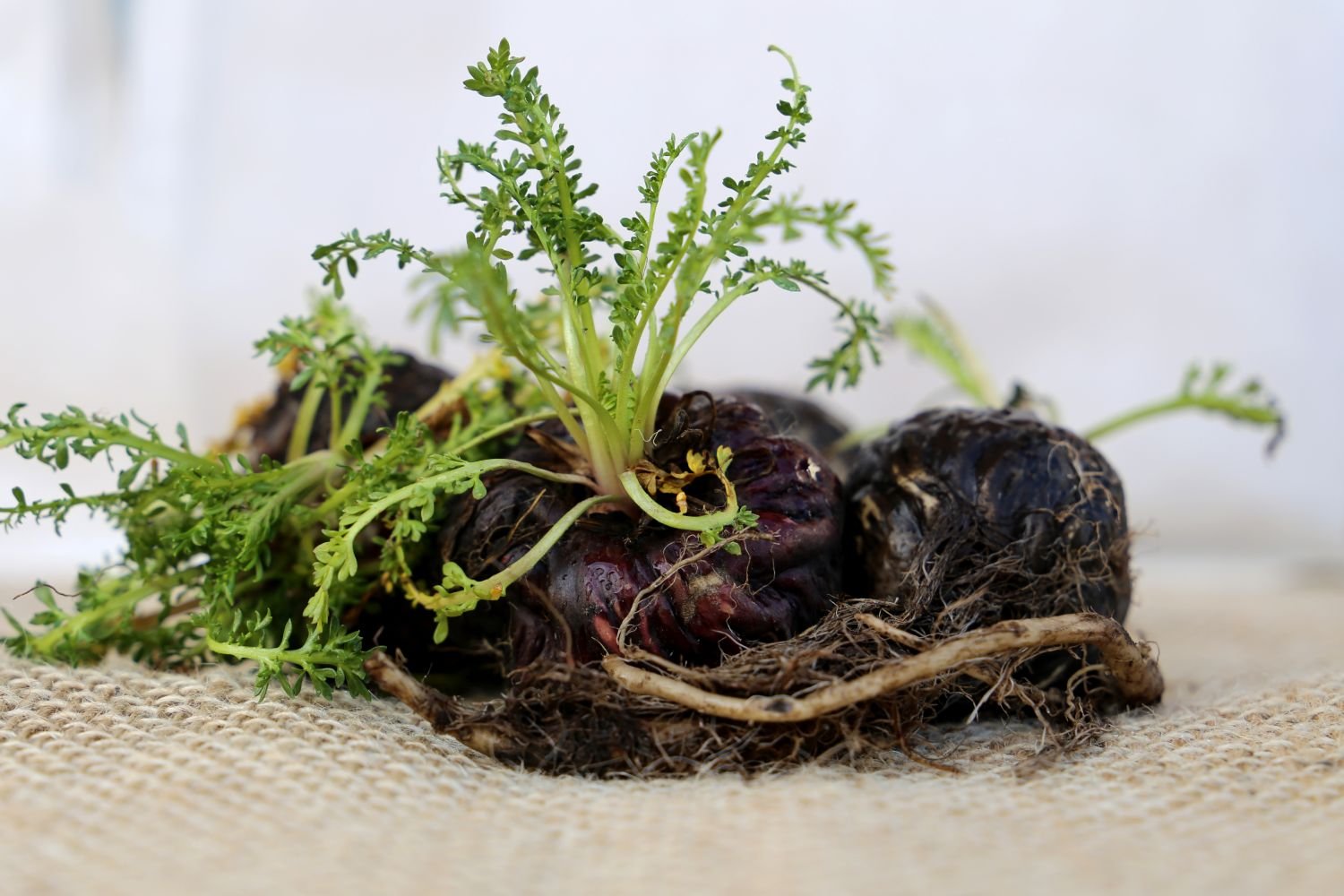

Black Maca Root: Timeless Vitality from the Peruvian Andes
Black Maca is derived from the root of the maca plant (Lepidium meyenii), a resilient cruciferous vegetable native to the high Andes Mountains of Peru. Botanically related to broccoli, cauliflower, kale, radishes, and turnips, maca has been cultivated in its homeland for over 3,000 years, making it one of the oldest crops known to humanity.
Thriving exclusively at elevations between 13,000 and 15,000 feet in the central Peruvian Andes — a unique and harsh environment found nowhere else on Earth — maca was discovered more than 2,000 years ago. Traditionally used by Andean communities as a nourishing food and general tonic for overall well-being, the black variety stands out for its rich, earthy flavor and status as the least sweet among maca types.
The edible portion of the root, known as the hypocotyl, naturally varies in color. Among these, black maca is particularly revered for its potent nutritional profile and supportive qualities.
Exceptional Qualities of Black Maca
Black maca is rich in essential and non-essential amino acids, high concentrations of B vitamins, and an impressive array of minerals — most notably calcium, along with magnesium, phosphorus, and others. It also contains a rare natural compound that may enhance calcium absorption, as well as vitamins, fatty acids, and beneficial antioxidants.
As a powerful adaptogen, black maca works in harmony with the body to help support a healthy stress response, balanced endocrine function, and overall vitality. It generates core energy for both body and mind without the jittery effects associated with caffeine, offering an invigorating yet gentle uplift. In traditional Andean practice, many consume maca in the morning as a daily tonic believed to nourish life force and promote sustained well-being.
Research has explored black maca’s unique attributes. A 2006 study published in Andrologia (Gonzales et al.) examined its effects on male rats and observed early positive changes in reproductive health parameters during a 12-day period. Other studies have investigated its potential to support endurance and reduce fatigue, with animal models showing extended time to exhaustion in swimming tests when supplemented with maca.
Black maca’s distinctive nutritional profile makes it a standout choice for those seeking natural support for energy, resilience, and holistic balance.

CONSTITUENTS OF MACA INCLUDE:
- Minerals: Calcium, Iron, Magnesium, Phosphorus, Potassium, Zinc, Copper, Manganese, Selenium, Boron
- Vitamins: Vitamin C, Thiamin, Riboflavin, Niacin, Vitamin B-6, , Vitamin D3
- Amino Acids: Threonine, Isoleucine, Leucine Lysine, Methionine, Phenylalanine, Tyrosine, Valine, Arginine, Histidine, Alanine, Aspartic Acid, Glutamic Acid, Proline, Serine
- Sterols: Brassicasterol, Ergosterol, Campesterol, Ergostadienol, Sitosterol
- Fatty Acids: Unsaturated, C12-0-Dodecanoic (lauric), C13-1-7-Secondary Metabolites: Macaridine, Macamides
- Benzylated Alkamides: Phenyl Acetonitrile and Macamides
- Essential oils acetonitrile, Benzaldehyde, Methoxyphenylacetonitrile
- Other Phytochemicals: tannins
